

Guilt about remarriage rarely announces itself as an argument. It arrives as a weight in the chest while choosing a date, a flinch when someone says your wife, a bad hour at three in the morning that was fine at dinner. Guilt about remarriage is a feeling that arrives alongside a second marriage — from grief, from a tradition’s teaching, from children’s faces, from vows that were meant — and it is not by itself a finding that anything was done wrongly. This page treats that feeling as a feeling — described, not diagnosed, and not read as proof of anything.
Why does guilt show up even when the divorce was not your choice?
Because guilt is not a verdict system. It is closer to an alarm that fires whenever something important is at stake, regardless of fault. People who were left, people who left, people whose first spouse died — all of them report a version of it.
Several sources feed into the same feeling and are hard to tell apart from inside:
- Grief wearing guilt’s clothes. Being happy again can feel like an insult to what was lost.
- A tradition’s teaching, absorbed young, still speaking in the voice it was learned in.
- Children’s faces, which are not an argument but land like one.
- Vows that were meant. They were meant. That does not stop being true.
- Other people’s certainty — the relative who states a position and leaves the room.
None of those is evidence about the rightness of marrying again. They are reasons the feeling exists, which is a different thing.
Is guilt evidence that something was done wrong?
No, and this is the most useful distinction on this page. Guilt is an experience. Wrongdoing is a moral question. The two overlap sometimes and come apart constantly.
The feeling shows up after harmless decisions, such as selling a house or declining an invitation, and goes conspicuously quiet in people who have caused real damage. Treating its volume as a measurement gets the question backwards.
What is worth attention is the difference between loud and steady. Loud guilt spikes around anniversaries, family gatherings and church services, and passes. Steady guilt is the kind that carries a specific sentence underneath it, one that keeps repeating whether or not anything has happened that week. That sentence is worth writing down, because a sentence can be examined and a feeling cannot.
Read side by side
Does forgiveness settle the question of remarrying?
As a rule, Christian traditions say divorce is forgivable. The disagreement is about what forgiveness does next — and both readings below are held by serious people reading the same texts.
Forgiveness restores the person, not the bond
Held, in different forms, in Catholic teaching and in some evangelical churches
On this reading, sin and bond are separate matters. A person may be fully forgiven for what happened in a first marriage and still be held by a bond that a civil divorce did not dissolve. Forgiveness is not the obstacle here; the standing of the first marriage is.
This is why the Catholic route runs through the annulment question rather than through repentance: what is asked is whether the first bond was validly made, not whether the person is sorry.
Forgiveness reopens what was closed
Held, in different forms, in much Protestant teaching and, by another logic, in Orthodox practice
On this reading, a first marriage can genuinely end, and what follows is a matter of repentance and grace rather than a permanent state. Passages read as stating exceptions — and Paul's discussion in First Corinthians, chapter seven — are taken to leave a door that mercy is expected to use.
Orthodox practice reaches something comparable by another road: a second marriage is permitted by economy, with a penitential character in the rite itself, which is neither a full endorsement nor a refusal.
Why does the guilt get louder around church, weddings and family?
Because those places make the question public. In private, a second marriage is a relationship. In a pew or at a family table it becomes a position other people may have opinions about, and the feeling picks up their volume.
Anticipated judgment does most of the work here. Many people describe rehearsing conversations that never happen, for example with a parent, a former in-law or a minister, and then carrying the verdict from that rehearsal as though it had been delivered.
It also helps to name what is actually being asked in these settings. Sometimes it is a real question about a tradition’s teaching, which belongs with someone qualified to answer it. Sometimes it is a social question about whether a family will still gather. Those two feel identical and are settled in completely different rooms.
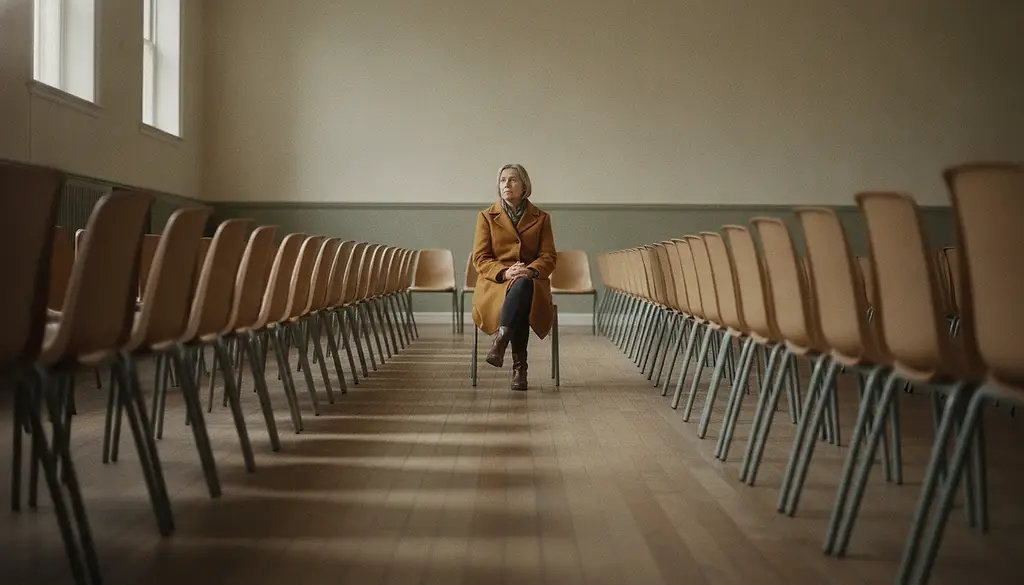
What about guilt toward the children?
This is usually the heaviest version, and the one most often misread. A child can have a hard time when a parent remarries, and that is not a moral ruling on the marriage. It is a response to change, to divided time, to a house that has rearranged itself again. Consider a child who likes the new house and still cries on the first weekend spent in it; both of those things are ordinary.
The honest position is that both things can be true at once: the marriage can be right, and a child can be having a hard time with it. Collapsing that into one verdict — if they hurt, I was wrong — tends to produce a parent who apologizes constantly and explains nothing.
Where the strain sits between the adults, over how the children are handled, that is a different conversation and often a supported one. Couples counselling is a room where two people work on a pattern together rather than each explaining it separately, and Sue Johnson’s Hold Me Tight describes what that work looks like in the approach she developed.
What do people actually do with the guilt?
Two routes, answering different questions. People who get somewhere tend to use both, in either order.
The moral question goes to a confessor. Whatever the tradition — priest, pastor, spiritual director — that is the person who can say what it teaches, how it is applied in your congregation, and what, if anything, it asks of you. A confessor is the person your own tradition authorises to answer that question, and a website is not. An article cannot do this, and one that claims to has stepped outside what it can know. If you want the textual background before that conversation, [what the texts say and how they are read](/faith/what-the-bible- says/) and the sharper form of the question, [is remarriage adultery](/faith/is-remarriage- adultery/), are set out elsewhere on this site without a verdict attached.
The state goes to a therapist. Not because guilt is an illness, but because a feeling that runs the household is workable material: what triggers it, what sentence sits under it, what it costs the marriage when it arrives. Mikulincer and Shaver’s review of an attachment perspective on psychopathology sets out how researchers describe patterns of closeness and distress in adult relationships, which is the kind of material that room works with. This is separate from whether a tradition permits the marriage, and it does not become unnecessary if the answer to that turns out to be yes.
A note about sequence. People often postpone the second route until the first is settled, and the first can take a long time. Nothing requires the waiting to be done unsupported.
Where this page stops
This page describes a feeling and the disagreement around it. It does not tell anyone whether they may marry again, and it cannot assess anybody’s situation.
Bring it to a person if any of this is true: the guilt is constant rather than episodic; it has started shaping decisions about eating, sleeping or leaving the house; you are hiding the marriage, or the doubts, from the person you married; or the thoughts have turned toward self-harm or toward not being here. That last one is not a matter for a website — contact a helpline in your country, or emergency services, today.
For the religious side of it, a confessor in your own tradition. For the weight of it, a licensed therapist, ideally one who has worked with faith and family conflict. Neither of those is an admission that something is wrong with you.
Does the guilt go away?
It tends to change shape rather than disappear. People describe it moving from a daily presence to something that visits on particular dates and then leaves — and some describe that what remained afterward was sadness rather than guilt, which is easier to live beside.
What tends not to help is arguing with the feeling, demanding that it justify itself, or waiting to feel nothing before proceeding. What tends to help is separating the two questions and giving each one to someone competent to hold it.
If the fear underneath is less about permission and more about whether this marriage can survive at all, that is a different feeling with its own page: the fear of marrying again. The rest of the faith questions — annulment, pastors who decline, where the traditions stand — sit together in the faith hub.