What it feels like
You can be sure of the person and still flinch at the word “marriage.” The first one was also certain, once — and that memory does not care how different this is.

The part of marrying again that nobody sees
Second marriages come with a second conversation — the one you have alone, about doubt, faith, exes and the fear of a second ending. This site keeps that conversation company: honestly, side by side, without verdicts.
Everything here describes; nothing here rules. Where honest readings differ, you will see both.
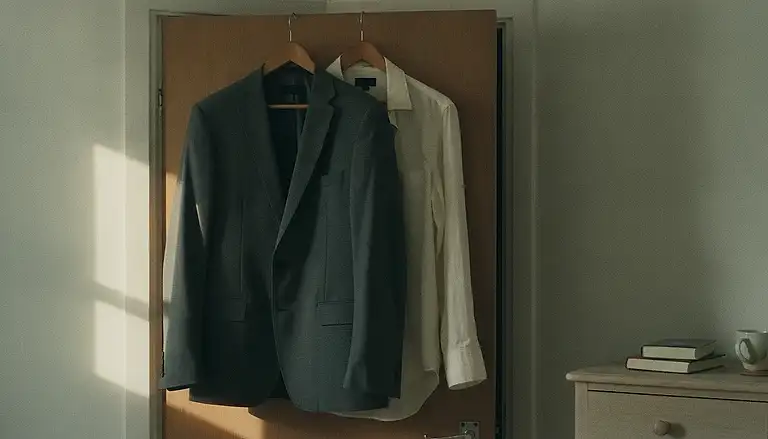
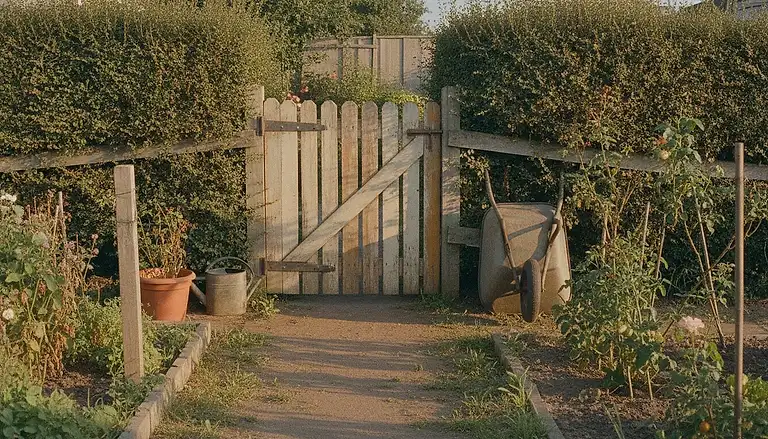
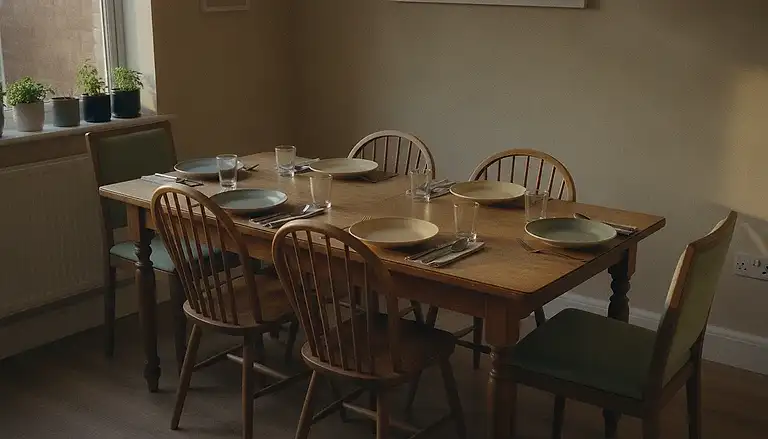
AI-generated imageEach person marrying again arrives with a life that was already packed before this one, and the room they share starts out as the only empty thing in it.
How this site reads
Most questions here have two honest sides, and this site’s habit is to put them next to each other at equal weight — readings of a text, positions of traditions, or, as here, a feeling and what people do with it.
You can be sure of the person and still flinch at the word “marriage.” The first one was also certain, once — and that memory does not care how different this is.
Treat the flinch as information, not prophecy. It usually points at something specific — a fight that never got had, a promise that broke — and specific things can be talked about, one at a time, with the person you are about to marry.
Almost everything difficult about marrying again has a second honest answer attached to it. Ask whether a divorced Christian may marry again and you get one answer from a parish priest, another from the church two streets away, and both of them are reading the same chapters. Ask whether the doubt you feel is a warning and you get the same split.
This site does not resolve those splits, and it does not hide them behind a confident paragraph. It sets the readings next to each other, shows what each one rests on, and leaves the decision where it belongs.
Nobody arrives at a site like this with a topic. They arrive with a sentence they have been saying to themselves for a while. If one of these is close enough, it goes straight to the page about it.
What the dread is usually made of, and how to tell an old fear from a present objection.
Fear of marrying again
Why a minister refuses, what the refusal is usually about, and what you can ask next.
When a pastor will not marry you
Where the ranking comes from, and what it is actually made of.
Being the second wife
What a couple can decide about contact, and why boundaries announced to an ex tend to fail.
Boundaries with exes
Why a stepchild resists a stepparent who has done nothing wrong, and what families do with it.
When a stepchild will not warm to you
Why the published figures disagree with each other, and what the fear underneath is asking.
The failure-rate fear
A first marriage is mostly two people. A second one arrives with everything the first one left behind: a former spouse who still appears in the calendar, children who did not vote on this, a tradition with an opinion about whether the wedding counts, and a private fear that the last ending is the pattern rather than the exception.
Those four pressures are the four sections of this site. Nobody arrives carrying all of them at once, and almost nobody carries only one for long.
The most recently gone-over page in each of the four sections. Every page here opens with a short answer, so you can read four sentences and leave if that was all you needed.
Can a Christian marry a divorced person? The texts the argument runs through, how traditions read them, and what to ask your own clergy. Described, not ruled.
Read this Faith
Getting married again after divorce changes what you notice, not who you are. What the first marriage predicts, and what it cannot tell you.
Read this The doubts
New wife and ex wife boundaries work when they are agreements between the couple, not rules announced to the ex. What holds, what backfires, and why.
Read this The ex factor
Blended family problems are rarely about schedules. They are about loyalty, unequal love and the loneliness of the stepparent — and where to take that.
Read this When it strains
Every article on this site is built the same way, so you know what you are getting before you start reading — and so you know where it ends.
Every page opens with the short version — three or four sentences that answer the question in the title before anything else. If that is all you came for, you can leave after it.
Where a question genuinely divides — a verse, a tradition, a feeling and what to do with it — the page prints the two positions side by side, in columns the layout refuses to rank.
Each page states what it will not do: no verdict on your marriage, no diagnosis of a person it cannot see, no tactics for handling someone else, no timeline dressed up as a finding.
Every article ends by naming the point at which reading stops helping, and which kind of professional the next step belongs to — a therapist, a family doctor, your own clergy, a lawyer.
Answered here in full, not teased. Each one links to the page that takes it further, and the eighteen questions that do not belong to any single page live on the questions page.
The claim is repeated far more confidently than the data supports: published figures disagree with one another because they count different things — different countries, different decades, and different definitions of what counts as a second marriage. What is worth knowing is that the pressures on a remarriage are largely structural (a full household from day one, loyalties older than the marriage) rather than a defect in the people in it.
The Gospel sayings on divorce contain that word, and almost every part of how to read them is disputed: who is addressed, what the exception clause covers, and whether the word names a past act or a continuing state. Traditions that read it as a boundary and traditions that read it as an ideal are both working from the same passages. This site describes both readings and does not choose.
In law, in most places, yes. In your tradition, it depends on which tradition, and the honest answer is that Christian churches have held opposite positions on this for centuries. We can tell you where each one stands and what it stands on; whether it applies to you is a conversation with your own pastor, priest or confessor, and no website is a substitute for it.
It is not a clinical condition and there is no diagnosis behind it — it is a phrase from forums and blogs, used to describe a former partner whose behaviour a household finds destabilising. The phrase settles a household’s feelings quickly, and it costs that household the ability to describe what actually happened in a given week, which is the thing a therapist, a mediator or a court would need.
Mostly: stop treating it as a problem with a solution and start treating it as a position the child holds, usually out of loyalty to a parent who is not in the room. Households that get through it tend to lower the demand for affection, keep the parent responsible for discipline, and let the relationship be civil before it is warm. None of that is fast, and none of it is a verdict on the marriage.
You mostly do not, and reading him for signs reliably produces more signs — a photograph on a wall, a slow reply, a tone on the phone all read as evidence once you are looking. The question that gets an answer you can use is a plain one, asked directly, at a moment that is not already a fight: what is still there, and what are we doing about it.
From the editor — Nell Ashworth, Editor · remarried
I started this site because the version of these questions I needed did not exist in one place. What I could find was mostly ruling: a page that told me what a tradition teaches without showing me what it reads, a test that scored whether I was ready, advice about a former partner written as though she were an opponent.
So every page here is built to do less. It sets out where the traditions stand and what they stand on, it describes what people actually feel at this point instead of grading it, and it says out loud where it stops and whose job the next step is. Where the honest answer is that careful people disagree, both readings get the same column width.
I read every page before it goes up and my name sits on it, which is all a byline can honestly mean here: not that I can tell you whether to marry again, but that if a sentence on this site is wrong there is somebody to write to. Who I am, and what that name does and does not claim, is on the about page.
It says
That these questions have honest answers on more than one side, that the sides can be set out fairly, and that describing a fear accurately is more use than grading it. Every page names where it stops and which kind of professional the next step belongs to.
It will not say
Whether you may marry again, whether you are ready, or what is wrong with a person it cannot see. No readiness tests, no diagnosis, and no scripts for handling a former partner — those are people, not opponents, and they are outside your control.
Faith pages describe where traditions stand and what they read — side by side, at equal weight. Whether you may marry again is a question for you and your own pastor, priest or confessor; we make that conversation better prepared, not unnecessary.
No quiz here will tell you whether you are ready to remarry, and no page will diagnose you. Doubt is described as the normal weather of marrying again. Where something looks clinical rather than situational, we point plainly to a therapist.
Former partners are people, not opponents. We describe patterns and the agreements couples make between themselves — never tactics for managing, out-maneuvering or building a case against someone.
The letter
That did not go through, and the address was not saved. It is our fault, not yours — please try once more, or write to us directly.
What arrives
A short letter when a page here has genuinely changed, or when a question comes up often enough to be worth answering properly. Sometimes that is twice a month. Sometimes it is nothing for six weeks.
What never does
No countdowns, no course, no “are you ready to remarry” quiz, and nothing sold to you or about you. We do not pass the address on, and we do not track what you open.
One address, kept by us and nobody else. Unsubscribe link in every letter.